


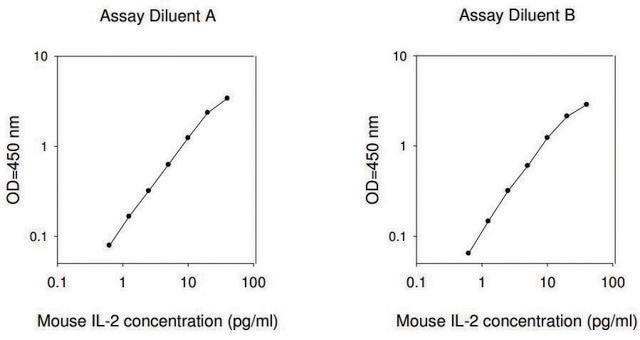
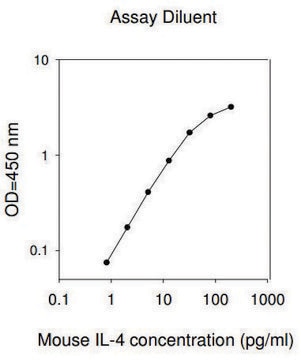

The assay requires 100 μL of 2-fold diluted sample per well. Testing samples in duplicate is recommended, resulting in a total requirement of 200 µL of sample.
RAB0308

Mouse IL-6 ELISA Kit
for serum, plasma and cell culture supernatant
Sinónimos:
B-cell stimulatory factor 2, CTL differentiation factor, Hybridoma growth factor, IFN-beta-2, IL-6, Interferon beta-2
Iniciar sesión para ver los precios por organización y contrato.
Seleccione un Tamaño
Cambiar Vistas
| A ustedes/SKU | Disponibilidad | Precio |
|---|---|---|
1 kit | Comprobar disponibilidad del carrito | $593.000 |
Acerca de este artículo
NACRES:
NA.84
UNSPSC Code:
41116158
Gene information:
mouse ... Il6(24498)
Input:
sample type plasma
sample type cell culture supernatant(s)
sample type serum
sample type cell culture supernatant(s)
sample type serum
Species reactivity:
mouse
Storage temp.:
−20°C
Shipped in:
wet ice
$593.000
Comprobar disponibilidad del carrito
Servicio técnico
¿Necesita ayuda? Nuestro equipo de científicos experimentados está aquí para ayudarle.
Permítanos ayudarlespecies reactivity
mouse
packaging
kit of 96 wells (12 strips x 8 wells)
technique(s)
ELISA: suitable, capture ELISA: suitable
input
sample type plasma
sample type cell culture supernatant(s)
sample type serum
assay range
inter-assay cv: <12%
intra-assay cv: <10%
sensitivity: 2 pg/mL
standard curve range: 0.82-600 pg/mL
detection method
colorimetric
shipped in
wet ice
storage temp.
−20°C
Gene Information
mouse ... Il6(24498)
General description
The Mouse IL-6 ELISA (Enzyme-Linked Immunosorbent Assay) kit is an in vitro enzyme-linked immunosorbent assay for the quantitative measurement of Mouse IL-6 in serum, plasma, cell culture supernatants and urine.
Immunogen
Recombinant Mouse IL-6
Application
For research use only. Not for use in diagnostic procedures.
Mouse IL-6 ELISA kit has been used for determining the levels of IL-6 in biological samples.
Mouse IL-6 ELISA kit has been used for determining the levels of IL-6 in biological samples.
Biochem/physiol Actions
IL-6 is a pleiotropic cytokine that plays an important role in host defense by regulating immune and inflammatory responses. Produced by T cells, monocytes, fibroblasts, endothelial cells and keratinocytes, IL-6 has diverse biological functions. It stimulates B-cell differentiation and antibody production, synergizes with IL-3 in megakaryocyte development and platelet production, induces expression of hepatic acute-phase proteins, and regulates bone metabolism.
Other Notes
A sample Certificate of Analysis is available for this product.
Please type the word sample in the text box provided for lot number.
Please type the word sample in the text box provided for lot number.
1 of 1
Este artículo | |||
|---|---|---|---|
| Gene Information mouse ... Il6(24498) | Gene Information mouse ... Il6(24498) | Gene Information mouse ... Il2(16183) | Gene Information mouse ... Il4(16189) |
| species reactivity mouse | species reactivity mouse | species reactivity mouse | species reactivity mouse |
| input sample type plasma | input sample type tissue lysate | input sample type serum | input sample type cell lysate |
| assay range inter-assay cv: <12% | assay range inter-assay cv: <12% | assay range inter-assay cv: <12% | assay range inter-assay cv: <12% |
| detection method colorimetric | detection method colorimetric | detection method colorimetric | detection method colorimetric |
| technique(s) ELISA: suitable, capture ELISA: suitable | technique(s) ELISA: suitable, capture ELISA: suitable | technique(s) ELISA: suitable, capture ELISA: suitable | technique(s) ELISA: suitable, capture ELISA: suitable |
Still not finding the right product?
Explore all of our products under Mouse IL-6 ELISA Kit
signalword
Warning
hcodes
pcodes
Hazard Classifications
Met. Corr. 1
Clase de almacenamiento
10 - Combustible liquids
Elija entre una de las versiones más recientes:
¿Ya tiene este producto?
Encuentre la documentación para los productos que ha comprado recientemente en la Biblioteca de documentos.
-
How much serum volume is needed for the analysis?
1 answer-
Helpful?
-
-
Hello. How much should I dilute tissue culture media for the assay? 2-fold? Thanks.
1 answer-
The Assay/Sample Diluent Buffer (Item E2) should be diluted 5-fold. This 1X Assay/Sample Diluent Buffer is used to dilute serum, plasma, or medium samples a recommended 2 fold. Please note that the levels of IL-6 may vary between different samples. Optimal dilution factors for each sample must be determined by the investigator.
Helpful?
-
-
マウスのパイエル板をホモジナイズした上清で測定は可能ですか?
1 answer-
This product is suitable with serum, plasma, and cell culture supernatant. However, it has not been determined if this product can measure the supernatant obtained by homogenizing mouse Peyer's patches. This application will need to be validated by the end-user.
While the requested ELISA kit nor any of the offered normal ELISA kits are neither designed nor validated with cell/tissue lysate samples, our kits are very accommodating to many different sample types so lysates will most likely work. If it is decided to test these kits with cell/tissue lysate samples, it is recommended to dilute the samples at least 5-fold with Assay Diluent to minimize any effects of the detergents in the lysis buffer. The samples may need to be diluted further but this would need to be determined by the experimenter empirically.
So for the original lysate, in general it is recommended to shoot for at least 1 mg/ml protein, preferably more, to achieve 50-500 ug/ml after dilution. Again though, this range should just be used as a starting point and the optimal concentration would need to be determined empirically.
Below are some general guidelines for doing so along with some basic tips for sample preparation.
Tips on Sample preparation
In brief, a lysis buffer must meet the following specifications:
A) has relatively low salt content (700 mM or less)
B) does not contain sodium azide
C) does not contain >0.1% SDS
D) does not contain >10 mM reducing agents (beta-mercaptoethanol or dithiothreitol)
This would include any buffers used for immunoprecipitations, including RIPA buffer.Helpful?
-